Best Mold Free Coffee Brands Organic and Clean
After much testing and coffee drinking, I’ve put together some of the best mold free coffee brands on the market. These are all high quality coffees and have specific certifications that express work and care in crafting their whole coffee production with health needs in mind.
How I Discovered Mold Free Coffee
At 19 years old, I began a diet that helped restore my health and, in the midst of it, I found I actually liked coffee. Not plain old Folgers mind you. If it wasn’t organic, I’d immediately start having joint pain. Time went on and I noticed the caffeine in coffee made me feel awful! Not only would I get joint pain, I’d feel like I needed to run a race, I’d talk a million times a minute, shaking and sometimes feel sick and have heart palpitations. If I drank a full cup it would even effect my breathing. Yes, it could be scary!
It didn’t feel good at all and I’d often need a nap due to the final blood sugar dip. I conceded to only drinking decaffeinated coffee and that seemed to help. But then, I found a coffee shop whose decaf affected me in the same painful way as caffeinated!
It wasn’t until 2023, when my family was in the midst of a mold renovation that mycotoxin and mold research brought me to ponder. Perhaps my side effects were less about the caffeine and more about the way my body was processing mycotoxins or other toxins combined with the caffeine.
So for the first time in years, I tried my first cup of caffeinated coffee. It was certified mold free and toxin free. I was so thrilled to have no unpleasant symptoms that I began taking pictures of my coffee and texting the good news to friends. After this discovery I bought a different mold free brand, just to make sure the toxins inside the coffee were the actual culprit. No way! It’ worked again! Once again I could drink coffee and enjoy it.
Since my discovery of toxin free coffee I’ve made it my goal to share about how conventional coffee processing can be dangerous and find the very best toxin free brands.
How Toxins Get in Coffee
Sadly, my reactions to coffee had to do with toxins my body couldn’t detox. Coffee beans are exposed to toxins in several different steps of their life. Here are a few of the common culprits.
Spraying Pesticides, Herbicides and Insecticides
The first step to growing coffee beans is raising the plant itself. The beautiful coffee bean tree can be exposed to many different enemies from bugs to diseases of the trees themselves. The answer to protecting them from threats such as bugs and infection is generally to use harsh chemicals. The problem is these chemicals will often be found on the coffee beans themselves after harvest.
Common substances used in coffee bean production are Glyphosate ( also known as RoundUp), Mancozeb, a fungicide, and Endosulfan, an insecticide. Atrazine and Chlorpyrifos are two herbicides also used in the farming of coffee. Organic certification is helpful in preventing Glyphosate and many other undesirable chemicals but toxin free coffee also goes a step further in prevention as shown below.
Prepping the Beans
After harvest comes the first stage of preparing coffee beans. In order to get coffee beans ready for the roasting process, they must first be dried. Where are the green coffee beans dried? Out in nature which is generally a humid warm environment. Sadly, this also happens to be the perfect environment to grow mold spores such as the dreaded ochratoxin A.
This research article found that “Different production stages of roasted coffee (crop management, postharvest practices and storage) along with environmental conditions do not ensure mycotoxigenic fungi free products.” In fact, when sampling 14 different coffees from local markets in Mexico, 11 were found to contain fungi strains producing Ochratoxin A. There’s more to it. In addition, 22 fungi strains found were related to Aspergillus and Penicillium.
Mold is a huge problem in coffee because certain strains of mold can cause enormous health risks within the human body including neural and mental health problems ( including in kids) as well as spurring on lung issues such as asthma and allergies. This is just the tip of the iceberg. Spend just a little time researching mold related health problems and you will find a long list that seems to never end.
The Worst Toxins Found in Coffee?
Of all the toxins that make their way into coffee beans, ochratoxin A is one of the most controversial. While the EU has made a limit to the amount of ochratoxin A allowed in food supplies, the U.S. has yet to create any limit. According to Cardiologist Dr. Kahn,
5. The safest way to avoid ochratoxin A would be for coffee manufacturers to purchase green coffee beans free of the toxin and were rapidly dried to avoid mold growth. There is no labeling to know if this occurs.
Currently, the most efficient way of keeping track of toxic substances found in your coffee, whether mold toxins, chemicals, pesticides or other is to research the lab results of your favorite coffee on company website.
Decaf Processing
The common process to remove the caffeine from coffee beans while still retaining the flavor uses chemical solvents such as methylene chloride and ethyl acetate. Eww!
Swiss Water Process
Making decaf coffee is done by one of three processes. The first uses the chemical solvents ethyl acetate and methylene chloride. The controversy in these chemicals has mainly come from the toxic chemicals “methylene chloride.” Too much exposure to these chemical can cause damage to the central nervous system. Even so, the FDA has decided the trace amounts in consumer coffee is not enough cause for concern.
The next decafination process uses carbon dioxide. It involves heating this gas to a high temperature, in which it will separate chemical substances.
The third process is called swiss water process and uses water along with charcoal and sucrose to help draw out the caffeine in the beans. This process is considered natural as it doesn’t use harsh chemicals but you should know it also takes out slightly less caffeine than the chemical processing.
The solvent method takes out about 96-7 percent of the caffeine and the carbon dioxide method extracts approximately 96-98 percent of the caffeine. Swiss water processing is able to remove 94-96 percent of the caffeine.
Non Toxic Coffee Terms You Should Know
Chances are, if you look into non toxic coffee, you’ll see these terms. Take a look so you understand what you’re reading.
Organic Certification
According to the USDA, there are several parts to being a certified organic product including, a three year transition period from conventional farming. Organic certified farms are prohibited from spraying conventional herbicides and pesticides. This results in the “organic coffee beans” you see at the grocery store. To see all requirements for “Organic” certification, check out the official USDA website.
Rainforest Alliance
If you’ve ever seen that frog emblem on many high-quality coffee bags, you might’ve wondered what it actually means. The rainforest alliance program certifies company’s sustainability practices. The certification simply means the specified company has committed to support local communities, protect wildlife and work by ethical business standards as promoted by the alliance.
Purchasing a rainforest alliance certified product means the consumers (aka you) are taking part in the support of the rainforest alliance goals.
High Altitude
Many quality Coffee brands boast their beans were grown at high altitudes. This has to do with offering the best coffee flavor. Arabica beans are considered a much better quality than Robusta coffee as it thrives on trees grown above 4000 feet. The temperatures are warm but dry with less rainfall. You will find coffee with chocolate and vanilla profiles from places like Sumatra or Costa Rica. This is also why South America is known for it’s high quality beans: Warmth and altitude.
Go up even higher in altitude and you’ll find beans grown to give high acid and fruity, floral or spicy notes. These are often grown in places such as Kenya, Guatemala or Papua New Guinea.
Biodynamic Certification
Biodynamic farms ensure principles of agriculture that holistically care for the land and animals in an ethical way. They treat pests holistically and work for a healthy microbiome among the soil, vegetation and animals.
Fair Trade Certifications
The fair trade emblem doesn’t mean the coffee is necessarily healthier or certified organic coffee. It has to do with the way workers are treated and paid. Many coffee bean farmers cannot live on wages paid and must find other work to support their families. The fair trade alliance helps raise the wage the farmers get, making it much more reliable of an income. Purchasing fair trade coffee means you may pay a slightly higher price in order to pay the grower a more fair compensation.
Best Mold Free Coffee Brands
Before I begin, let me say I would be all for a cup of ANY of these coffees. Each one is a higher quality than any conventionally made coffee on the market.
This review is solely my own opinion and you may have differing opinions. My quality score is based on my own opinion of quality. That said, know I try to include a review of my “likes/ dislikes” as well as the overall quality ( smoothness, amount of bite, source, value) of each brand. In the end I truly hope it helps you decide which coffee brands may be the best pick for YOU.
Purity ( #1 TOP PICK)
I absolutely LOVE the smoothness of this coffee. It has so little acid, I could drink it without any cream or milk added and enjoy the whole flavor. In addition, the company boasts health benefits specific to each of their different bags. Purity coffee boasts a high antioxidant level and I especially love that they don’t just have a decaf, but also a 1/3 caffeine coffee.
Purity also offers boxed coffee that comes with coffee filled bags. Their version of instant coffee, these tea bags can be steeped and are perfect for backpacking, trips or days when one doesn’t have the advantage of using an expresso machine.

Certifications: USDA Organic, Bird Friendly, Certified Biodynamic, Rainforest Alliance.
Quality: 5 out of 5 stars
Tested: Purity Ease Dark Roast Whole Bean, Purity Calm Decaf Whole Bean, Purity Balance 1/3 Caffeinated whole bean, Purity Protect Medium Roast whole bean, Purity Flow Sachet Packets.
Flavor Notes: In my favorite, Ease, I love the smooth yet dark, rich flavors. Notes of Dark chocolate, roasted walnut and brown spice. It has reduced acidity and increased chlorogenic acid lactones, which are antioxidant phenolic compounds.
Of all the coffees, Purity is the one brand you’ll find in my kitchen shopping guide.
Cost: Approximately $26. $21 with subscription
Bulletproof Coffee
This is the very first brand of mold free coffee I discovered. Though I was thrilled to taste it’s less acidic coffee beans and not react to caffeine, I still notice more reaction to this brand than other toxin free brands. I also notice a slight bite compared to other toxin free coffees. I don’t feel it’s made quite as smooth but it’s also cheaper, making it a good choice for tight budgets. I will definitely go back to this one for the price though it wasn’t the highest quality.
Certifications: Rainforest Alliance. Bulletproof clean coffee process (though no testing results were available on the website).
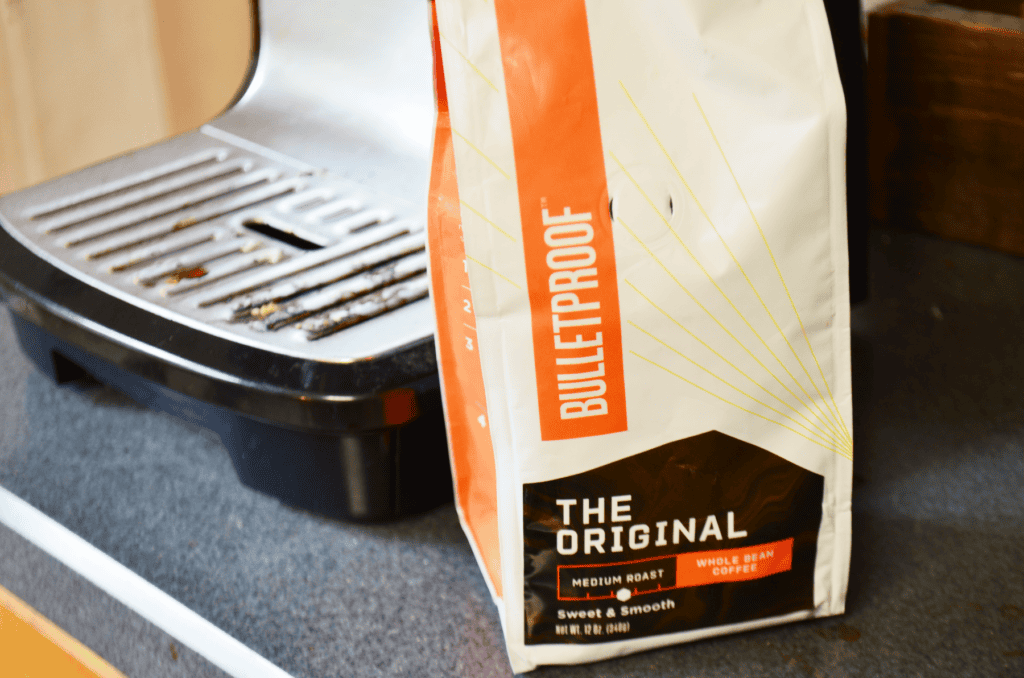
Quality: 3.5 of 5 stars
Tested: Original Whole Bean medium roast.
Flavor Notes: Bullet Proof Coffee has a smooth and smoky flavor. Quite dark tasting. There is a slight bite and perhaps a bit of burned/ roasted flavor that comes through.
Website: https://www.bulletproof.com/
Cost: Approximately $16
The Edge
This Coffee has smoothness and great quality but I couldn’t get past the slight sour flavor. I tend to enjoy a cocoa or nutty flavor to my coffee so the smoky combined with a citrus taste wasn’t my favorite. Even so, I felt the quality much better than many coffee shops here in the northwest.
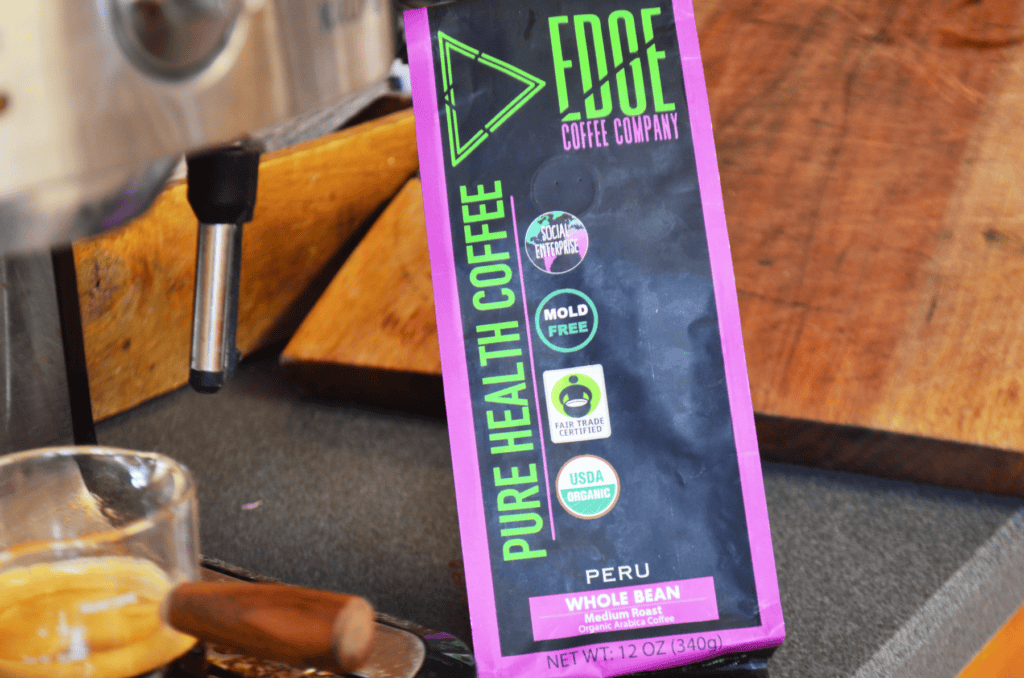
Certifications: USDA Organic, Fair Trade Certified, Mold Free (third party tested).
Quality: 4 out of 5 stars
Tested: Peru Whole Bean Medium Roast
Flavor Notes: This one had a combination of citrus and smoky notes. Perhaps some floral as well.
Website: https://edgecoffeecompany.com/
Cost: Approximately $28
Danger Coffee
The difference between Danger Coffee and other brands is that this brand remineralizes their coffee. Using a roasting process with Fulvic and Humic minerals results, according to Danger Coffee, in more than 50 trace minerals and electrolytes being brewed with your coffee. You could call it a “mineral coffee.”
Honestly, while it is better on my system than most coffees, it isn’t as enjoyable for me. There’s more of a bitter ending as well as higher acid. Perhaps a little burnt flavor as well? I do believe this coffee far exceeds conventionally made brands. On the other hand, it doesn’t come close the amount of delight these other Toxin free brands give me.
Certifications: None that I can find.
Quality: 3 out of 5
Tested: Dark Roast Remineralized Whole Bean Coffee
Flavor Notes: The website calls the flavor note “smoky oak” but I tasted a slight burnt flavor. Nougat and molasses.
Website: https://dangercoffee.com/
Cost: Approximately $23 if subscribed, otherwise $35
Clean Coffee Co.
Both my husband and I thoroughly enjoy this brand of coffee! We think of it as dark, sweet and smooth. Often, dark coffees have a bitter aftertaste but not this one. The company boasts low acidity (5.31 on website) and I my stomach found this to be true. My first cup transported me back onto an Italian cobblestone street when I was 19; back when I first understood the beauty of coffee. I had no reaction to this brand except for a slight caffeine buzz.
We found this coffee to be the best value BUT it’s hard to find the availability to purchase.
Certifications: Rainforest Alliance Certified, the website claims third party toxin testing but the webpage with test results wasn’t available
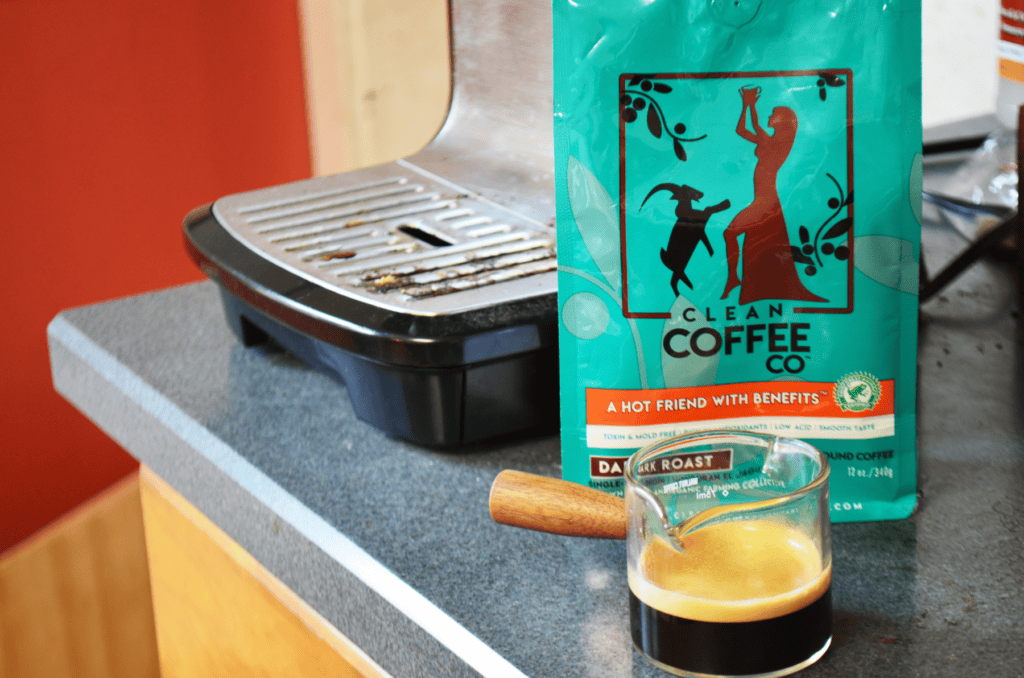
Quality: 4 out of 5 stars
Tested: Dark Roast Ground Coffee Single Origin Honduran
Flavor Notes: cocoa, nutty, great for a cup of espresso.
Website: https://cleancoffeecompany.com/
Cost: Approximately $20
Fabula Coffee (#2)
I do feel the caffeine, though I’m not having a bad reaction to the caffeine. This coffee is superbly smooth and elegantly rich. I like the low acid level in this brand’s roast as well. I must admit Fabula coffee grew on me. At first, I could tell it’s quality was great but felt it was too sharp for my liking. After time and making some lattes, I adored it.
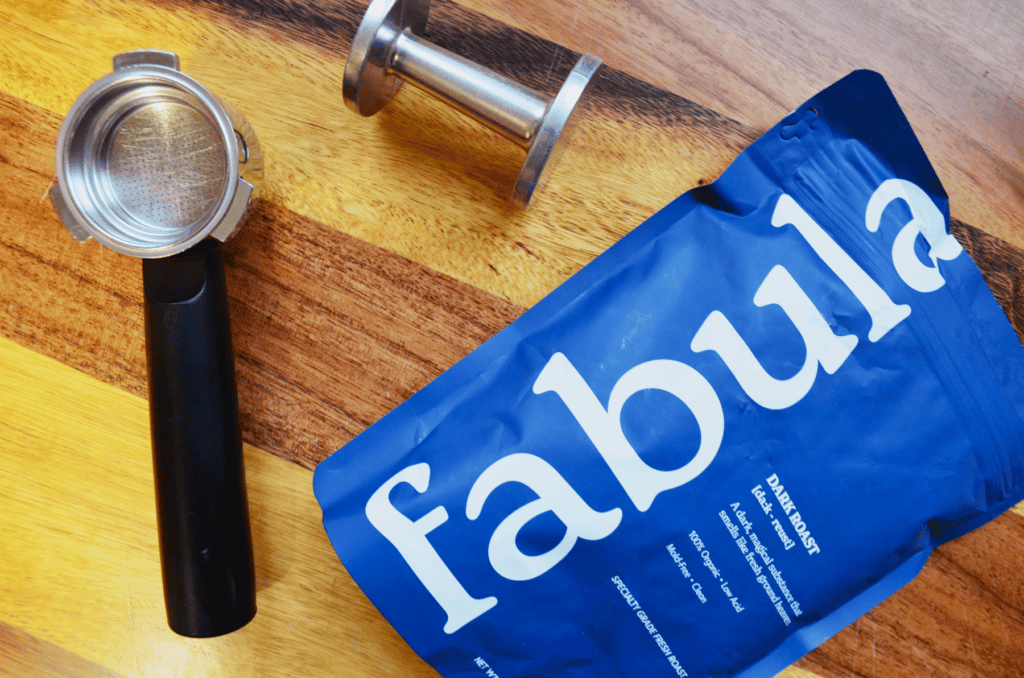
Quality: 4 1/2 out of 5 stars
Certifications: USDA Organic, Mold tested and will email consumer results if requested. Claim Fair trade and Sustainable Practices but I couldn’t find a certification for these. Fabula Coffee partners with One Tree Planted, which works towards reforestation.
Tested: Single Origin Peru Ground Dark Roast
Flavor Notes: Toasted, smoky roasted flavor, Praline, Nutty
Website: https://fabulacoffee.com/
Cost: Approximately $23 if subscribed, $30 for a one time purchase. Purchasing higher quantities lowers the price as well.
Natural Force Clean Coffee
I must admit this coffee was very high quality and reminded me of my visit to a coffee plantation in Hawaii. My own Natural Force Clan Coffee was so fresh, but unfortunately, I can’t take too much “sour” flavor in my coffee. When testing the shot, I got a “tomato” flavor which was too much for my liking though the actual shot came across rich and smooth.
Using this coffee for lattes proved oh so tasty as the slight citrus notes combined beautifully with the milk. I’d score this one with great quality, especially for those who enjoy citrus notes.
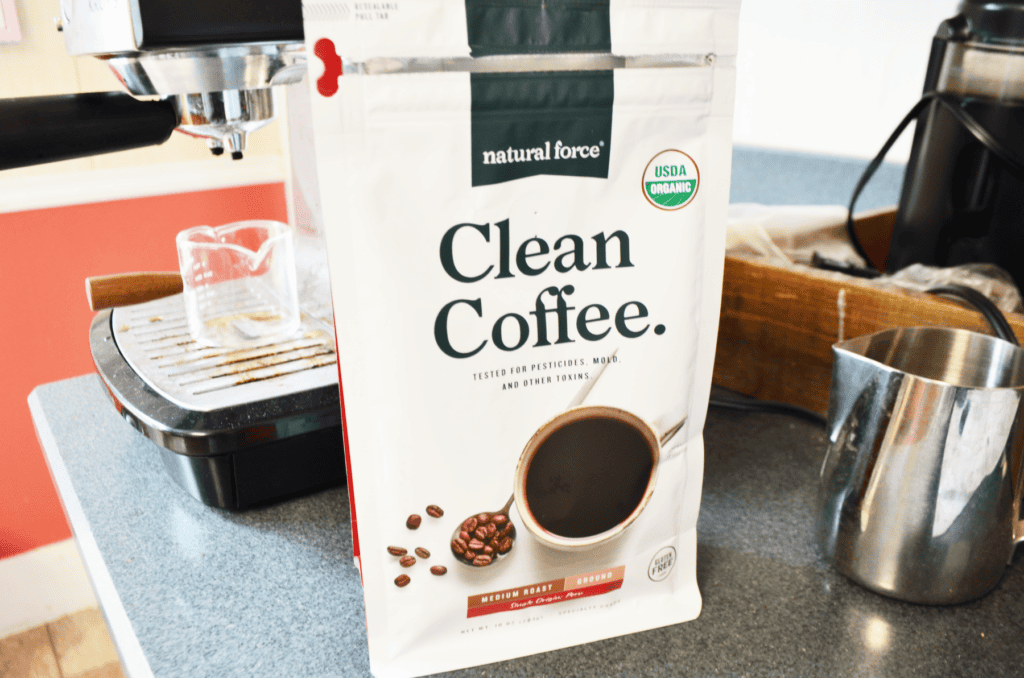
Quality: 4 out of 5 stars
Certifications: Third Party tested for mold and toxins with a link. They are very open about their lab results. USDA Organic, Vegan, Paleo certifications. Direct trade, Sustainably Grown.
Tested: Peru Origin, Medium Roast Ground ( Gently roasted for higher antioxidants)
Flavor Notes: Citrus, Smoky
Website: https://naturalforce.com/
Cost: Approximately $28 or $20 with subscription
Lifeboost Coffee
I liked that the Lifeboost brand has a slight citrus flavor but no more than that. It kept the taste especially smooth and well done for the roast. This company also sells tea and other supplemental health boosters. A friend introduced me to this Lifeboost Coffee as she loves it.
I found the flavor still carries a slight bitter after taste which I didn’t care for, but all in all it was one of the better brands I’ve tried. I did find this coffee to be low acid as it said on the packaging which is a plus for my stomach.
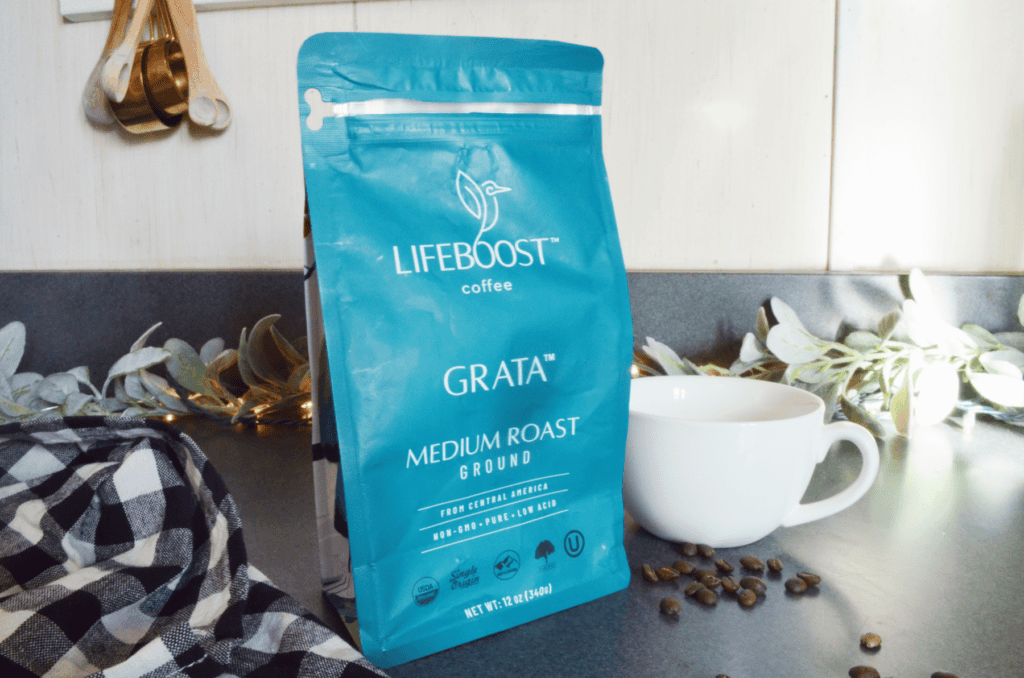
Quality: 4 out of 5 stars
Certifications: USDA Certified Organic, Third Party Toxin and Mold Tested ( but no results on Website), Sustainable Practices
Tested: Single Origin Grata Medium Roast Bean from Central America
Flavor Notes: Dark chocolate and dried fruit
Website: https://lifeboostcoffee.com/
Cost: Approximately $28 for a one time purchase or $25 for a subscription
Java Planet Coffee (#3)
I love this family owned company and the way they share employees stories on their website. As for the coffee, it’s also quite impressive. Each bag comes from a different area. I tried the single origin Columbia. It proved exquisitely smooth and easy on the stomach. I must say it gave me a sweet start to the day with it’s smoky, coco flavor.
Another plus is that this coffee can be found at some health food stores as I discovered this brand at a nearby Co-op Grocery store.

Quality: 4 1/2 out of 5 stars
Certifications: USDA Organic, Smithsonian Bird Friendly, third party Mold Tested ( no results posted on website).
Tested: Columbia Organic Medium Dark Roast
Flavor Notes: Smoky Cocoa, butter, nutty, slightly died fruit.
Website: https://www.jporganiccoffee.com/
Cost: Approximately $23 or $21 with a Subscription
Thompsons HB Coffee
Having a sweet spot for California life (Anaheim born gal here), I really wanted this to be a favorite. Unfortunately, when it came down to it, I couldn’t give it raving reviews. While I love me some smoky rich flavor, I found this roast left more bitter smoky flavor than I could take.
It could make a great latte, but a smooth shot soured my face more than most all other coffee tests I’ve done. Perhaps though, the regular roasts are less bitter than the decaf I tried?

Quality: 3 out of 5
Certifications: USDA Organic, Third Party Mold and Mycotoxin tested with lab results on website.
Tested: Decaf Dark Roast Ground
Flavor Notes: Dark Chocolate, Smoky, roasted
Website: https://healthybeancoffee.com/
Cost: Approximately $23 or $18.50 with Subscription
I will continue to keep you up to date on some of the best toxin free coffees out there! I’d love to hear if you have a specific brand you love too.
Heirloom Coffee Roasters
First, I must say I love the branding on this coffee company. I’m a visual chick and they did everything so well! That said, while the coffee itself was good, it still didn’t compare to my favorite. Would I buy this one again? Yes! They’ve definitely done a good job.
In the end, it just didn’t have enough flavor for me. Could that have been because I chose a Guatemalan blend? It’s possible. I’ve noticed since my first trip to Guatemala at 18, their coffee is very gentle. This makes it easy for those who don’t like the dark expresso flavor to take in but I do like some richness to my coffee.
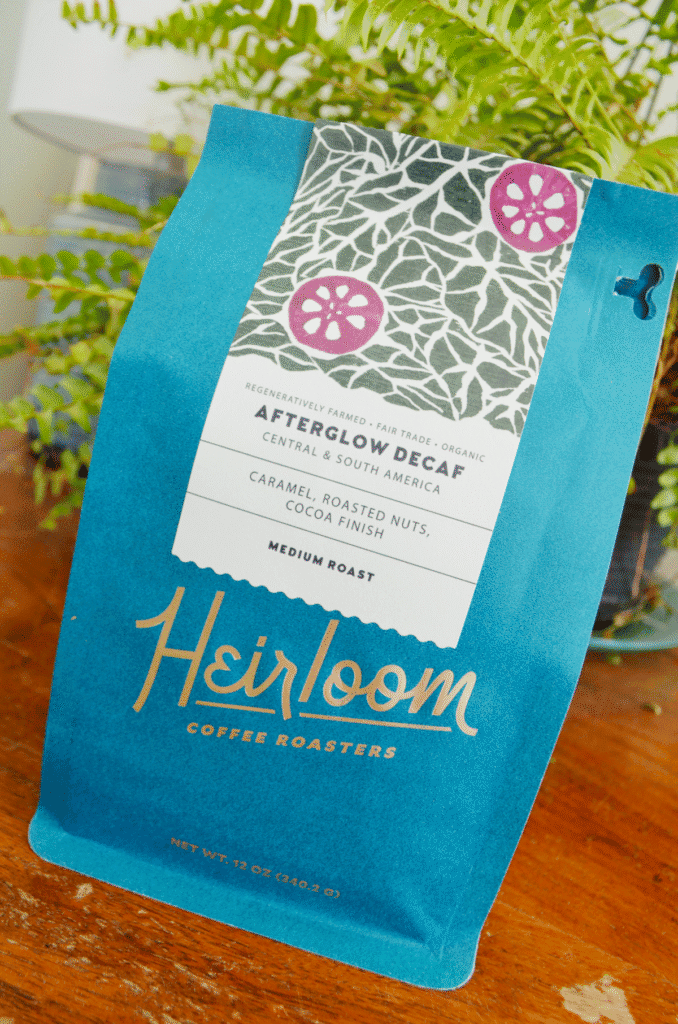
Some of the highlights of this brand is their commitment to regenerative agriculture. They claim to be the first certified organic regenerative coffee brand. Here’s how they describe this:
“…it is a commitment to farming practices that restore soil health, strengthen biodiversity, protect waterways, and support the wellbeing of farmworkers and rural communities.”
heirloomcoffeeroasters.com
Another unique addition to this coffee is the ability to see your specific bag’s test results for things like pesticides, glyphosates, heavy metals and mold. Just look on the bottom of the bag and type in the printed code on heirloom’s website to see the testing results. This sets a new bar for third party testing.
Quality: 4 out of 5 Stars
Certifications: Regenerative Organic Coffee, third party lab tested for 300+ toxins including mold, pesticides, glyphosates and heavy metals and more. Swiss water decaffeination processed. Fairtrade.
Tested: The Guatemalan Decaf
Flavor Notes: Caramel, Cocoa
Website: https://heirloomcoffeeroasters.com/
Cost: Approximately $25
Storing Your Coffee
Spending money of a choice bag of coffee beans means a splendid cup of joe. Keeping those beans fresh is so important to a perfect cup of coffee. One of the best things you can do is to keep them air tight and out of the light! Look HERE for tips of keeping your coffee fresh.
Happy Sipping!
From the Hilltop,
I’m a Huntington Beach girl. I miss it so much. Too bad their coffee didn’t do well.
Thank you so much for your website and youtube channel. I’m learning so much.
Ah yes! I agree.